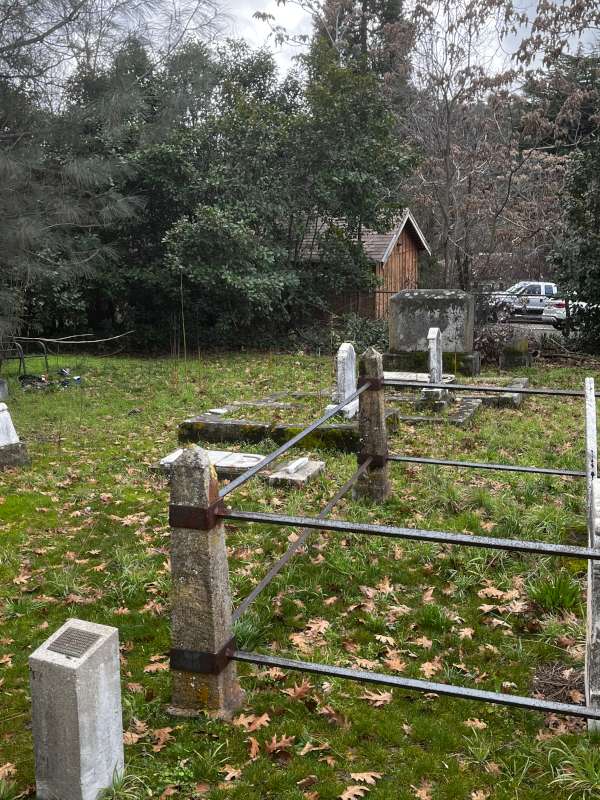
The Placerville Jewish Pioneer Cemetery dates to 1854. Yes, there was an active Jewish community here early.
The first known burial was in 1856. The last was in 1968. There are 22 headstones visible, but as with cemeteries of the era, there are likely more burials.
Local Jews organized the Placerville Hebrew Benevolent Society in 1854. In 1858 The Mountain Democrat reported the organization of a congregation. Property was acquired for a synagogue in 1861 on Cottage Street, which is between Highway 50 and Spring Street. We assume this cemetery was affiliated with that ill-fated synagogue.
In 1878 a freak windstorm blew the roof off the Placerville synagogue. It was rebuilt but ultimately abandoned in 1903 due to declining attendance.
This and other pioneer Jewish cemeteries in the Gold Country are managed by the Commission for the Preservation of Pioneer Jewish Cemeteries and Landmarks. They no longer lock it, but don’t seem to want any help maintaining it.
A particularly endearing custom in Jewish Cemeteries is the practice of leaving blue stones on the graves as a way to show respect and remembrance for the deceased. It also brings comfort to those who’ve lost a loved one.
Samuel Snow
The most notable burial here is the Snow family. Snows Road between Camino and Pleasant Valley is named for them.
German by birth, Samuel Snow studied medicine in France before immigrating to the United States in 1837. He arrived in New York on January 1 and soon completed his studies. He met and married Paulina Fink, who was also German.
Dr. and Mrs. Snow moved to Wisconsin where he worked as a doctor and engaged in fur trading with the tribes. He received his naturalization papers in St. Croix, Wisconsin on July 30, 1849. Sam and Paulina relocated to Council Bluffs, Iowa where he bought a ranch and continued to trade with the Indians.
The winters proved difficult for Paulina, so they decided to move someplace warmer. Their first child, Emanuel, was born under a wagon in Iowa on May 15, 1850, the very day they departed with a wagon train for California. They arrived in El Dorado County, California in August 1850.
Snow started a store selling supplies to miners from a tent in Dogtown, a mining camp in modern day Pleasant Valley. In late 1851 or early 1852, he bought property in the area, and opened a hotel, store and ten-pin alley, reserving one room for his medical practice. The Snows would eventually have eight children, six boys and two girls.
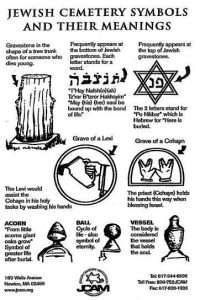
Symbols in the Jewish Cemetery
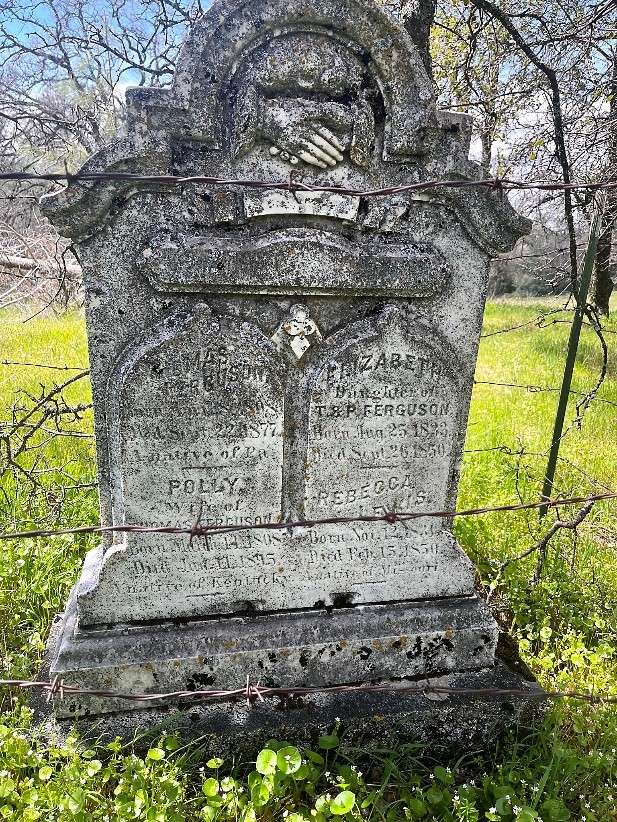
Handshakes can mean a final farewell or eternal bond between the living and the dead. Clasped hands were sometimes meant to portray the link between a married couple. Other times a handshake indicated God reaching out for the deceased to bring them into his presence.
“Spock Hands” – This symbol indicates that the person buried is a Cohen; that is, a descendent of Aaron, the brother of Moses. They have inherited a priestly heritage. Cohen literally means “priest” in Hebrew. The positioning of the hands or ‘Cohen hands’ is used when the Kohanim bless the congregation in synagogue. This symbol may only be used for a deceased male Cohen.
The Placerville Jewish Cemetery was part of the 2024/2025 “Lesser Known Placerville Cemeteries” tour led by Mike Roberts, Save the Graves.