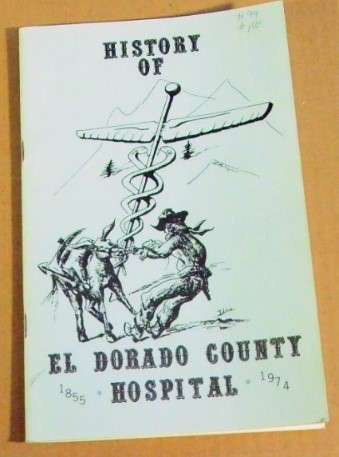
Timeline:
1848-early ‘49 – Nearest hospital is in San Francisco.
1849 – Immigrants arrive in force. Four Placerville doctors practice in Placerville. Care is expensive: $16/day. Board and lodging for sick person: $20-$30/day. Death rate is “appallingly high.”
1850 – Drs. Asa Clark and O. Harvey began lobbying for a county hospital.
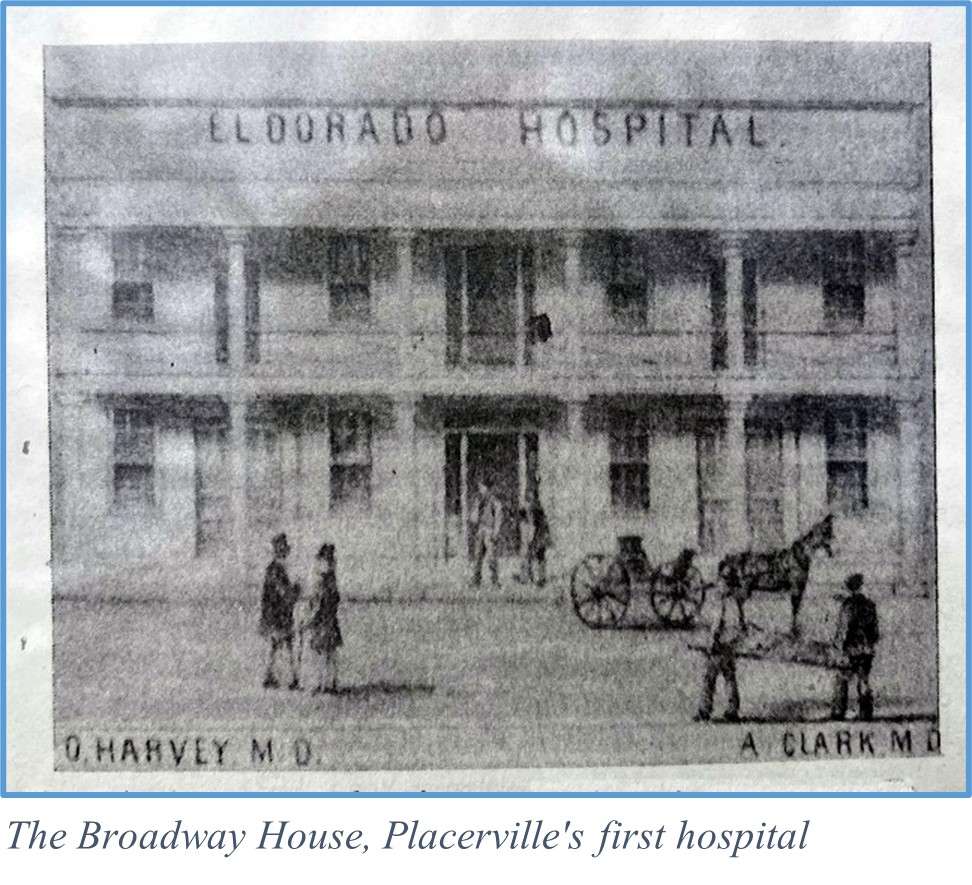
1855 – County funds hospital in former Broadway House Hotel in Upper Placerville. It quickly gains a reputation as one of the best in the state.
1857 report to Board of Supervisor: “…the insane … have been accorded asylum… the deaf, dumb, blind, indigent… become inmates of the County Hospital. This class of cases have received at our hands that consideration due to their unfortunate condition, although the terms of our contract do not oblige us to take charge and maintain them.”
1861 – Dr. I.S. Titus takes over. Former state senator who sponsored legislation to provide state funding for outpatient care in all counties.
1862 – County dedicates 8 acres on Quartz Hill for hospital which includes a main hospital, outpatient clinic, pest house (isolation ward), residences, orchard and gardens. Titus assistant Dr. John Cook takes over.
1880 – Dr, H.W.A. Worthen takes over.
1898 – Dr. Noble Mountain takes over and reports “In addition to a steadily increasing rate of patients injured in mining accidents due to the development of deep mining, the hospital handled the seemingly chronic problem of the treatment of teenage boys who wounded themselves while practicing the quick draw.”
1910 – early 1950s – Placerville Sanatorium on Coloma Road serves as public birthing and pediatrics center.
1912 – County hospital burns to the ground and is rebuilt for $13,000
1924 – Burned again. Repaired.
1934 – Pest house burns and is not rebuilt.
1946 – New public hospital built and equipped for $345,000. From the 1880s to 1904 152 of 1,001 patients were indigent. After 1946 charity patients become bulk of admissions. Administrators are proud that “the same high quality of care and concern are maintained.”
1959 – Marshall Hospital opens.
1965 – Remodeled and new building added for $500K, including 65 beds, surgery suite, X-ray, and $300,000 in new equipment. The new building likely required more parking, which probably was installed on a portion of the cemetery.
1972 – Universal Medical Systems leases hospital under terms “quite favorable to the county.” UMS insures that “large sums will be spent on upkeep and equipment.”
1974 – UMS loses its license. Hospital closes.
County Hospital Cemetery
In all this hospital history, there is little mention of the cemetery. However, researchers found hospital and archival records that indicate at least 430 burials on the grounds between 1862 and 1934. The number is likely much higher… between 500 and 700+.
This all came to light when residential development was repeatedly proposed on Quartz Hill from the 1980s through the early 2000s. The applicants all relied on a 1987 report by Dana Supernawitz which concluded that there were likely hundreds of burials on the site but identified just 11 potential burial sites and concluded that the cemetery had “little or no archeological value.” He recommended the expansion of Robin Court to access the proposed project. That report led the city planning department to recommend approval of the Quartz Mountain Estates project above the cemetery.
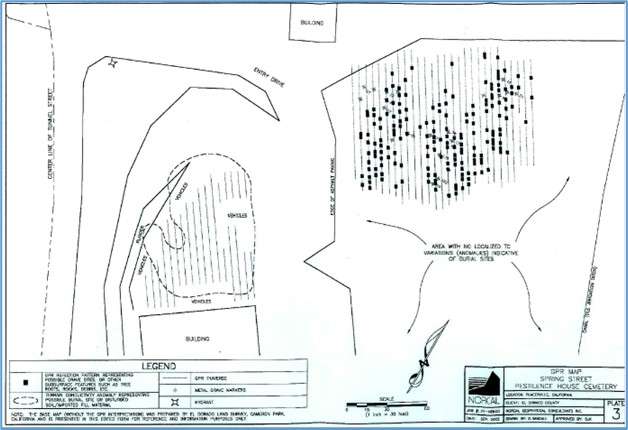
The project languished for the next two decades, during which time the county acquired the property and commissioned a 2003 ground penetrating radar study which found firm evidence of at least 170 burials on the hillside. Workers had previously stumbled on graves while expanding the parking lot, and grave stake #317 was discovered on Tunnel St. in the 1970s. A total of 814 deaths occurred at the County Hospital between 1862 and 1923. Researchers could find only 21 interred elsewhere.
When yet another proposal for Quartz Hill landed on county DOT Director Tom Celio’s desk in 2009, he didn’t mince words. He declared the 1987 report to be “flawed,” referencing the subsequent research which indicated far more burials, and argued that there were likely many more burials beneath the parking lot and structures. He strongly recommended that any future projects should spare no expense to protect, document and mitigate any potential damage to the cemetery.
The cemetery is roughly 3 acres. It is bounded by Tunnel Street on the west, Robin Ct. on the north, an old irrigation ditch (which later became part of the South Fork Canal) on the east (uphill) and a drainage culvert separating it from the hospital fruit orchard to the south. Early burials would have been as far from the orchard as possible. This would place the oldest burials at the northeast corner of the hill, just below the ditch.
Accounts of the various expansions throughout the hospital’s 110-year life include no mention of graves discovered during specific expansions. However, anecdotal reports from neighbors and workers repeatedly mention the discovery of caskets and remains during the most recent parking lot expansion. Researchers heard stories of workers being inoculated and clothing being burned.
There were certainly many burials of victims of communicable diseases such as smallpox, cholera, tuberculosis, and diphtheria, with no mention of any portion of the cemetery set aside to receive contaminated deceased.
The graveyard has been the subject of multiple grand jury reports… all critical. Some suggest that concern over exposure to corpses which might contain communicable diseases has contributed to the lack of documentation, preservation and care around this historic pauper graveyard.
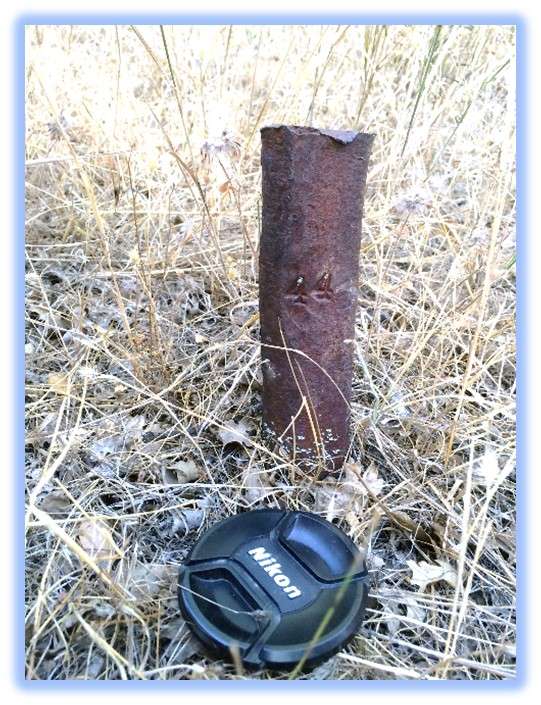
Graves were originally marked with wooden markers or simple slate markers which have not survived. The only substantive action was the installation of numbered iron grave stakes starting in 1910.
The stakes were made of repurposed wagon tires, stamped with a number. The evidence of their past life can be seen when viewed from above. Each stake has rough tapers on one of the flat sides…. the “business end” of the tire.
Mike Roberts, Save the Graves, located 4 of these iron markers in 2015. He can now only find one, number 44. It can be found on the right side of the trail 50 feet above the “No Trespassing” sign.
Quartz Hill History
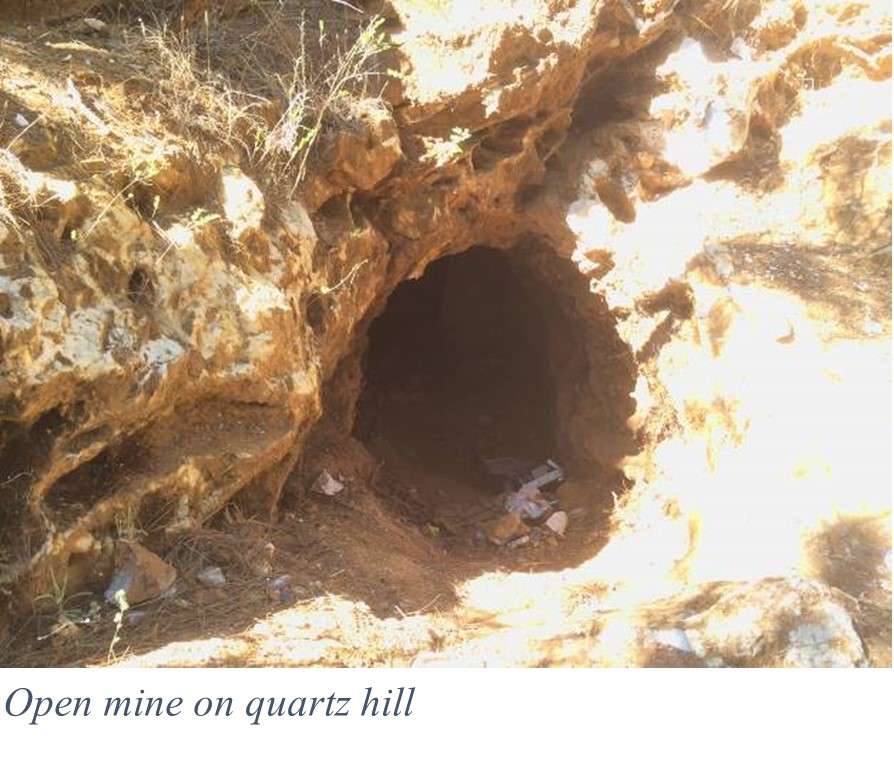
The old county hospital and cemetery were located on what’s known as Quartz Hill. The mother lode passes directly beneath Quartz Hill. It became the site of massive, but ultimately short-lived hard rock mining operations in the 1860s. A couple hundred feet above the cemetery, open tunnels are still in evidence.
The hill also houses remnants of a sophisticated network of concrete flumes.
The hilltop was subdivided at some point in the 1980s or 90s. Cul-de-sacs and some street signs remained in the 2010s.
El Dorado County Hospital Cemetery was part of the 2024/2025 “Lesser Known Placerville Cemeteries” tours led by Mike Roberts, Save the Graves.