Headstone Cleaning Steps
Good for the Stone, Good for the Soul

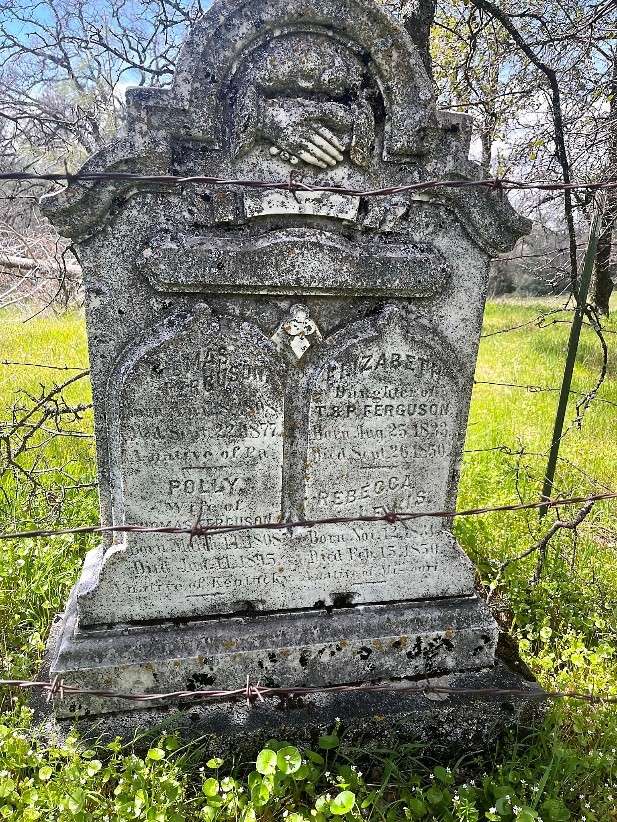
Our oldest headstones are marble, a relatively soft, absorbent stone. Newer headstones are made of granite, which is MUCH harder. The old marble is damaged by a fungus/algae hybrid called lichen which also makes the inscriptions hard to read. Removing the lichen extends the life of our historic headstones. Start with the marble. The granite is less critical, and can be much more difficult to clean.
Cleaning Steps
- Lay hands on the headstone and make sure it is sturdy.
- Take a picture of the headstone, preferably a selfie.
- OPTIONAL : use findagrave.com to discover more about who you are cleaning.
- Use a plastic scraper to quickly remove the loose dirt and lichen from the headstone, front and back!
- Saturate the headstone with water.
- Spray a biological headstone cleaner such as D2 or Wet and Forget liberally on the front and back. More water.
- Use a nylon brush to scrub the headstone.
- Spray some more water on the headstone and keep scrubbing. Water water water.
- Use a toothbrush to clean the carvings as needed. More water.
- Rinse the headstone with.. Yes, more water.
- Do steps 5 thru 10 repeatedly. Use lots of water.
- After a couple iterations, or whenever you think you got it as clean as it is gonna get, spray one more coat of headstone cleaner on both sides and leave it on – no more scrubbing, no more water.
- Take an after picture, preferably a selfie.
- Congratulate yourself on a job well done. You have helped preserve this important piece of history for many more years.
- Return to the cemetery regularly to check on your headstone… for the rest of your life.
NOTE: Some softer marble gets can become discolored when cleaned. Impurities in the marble react to the water and cleaner. The biological cleaners will continue to work over time. In most cases the marble will be lily white in two months.
More About Lichen
Lichens are mysterious things. Scientists still do not understand how they work. There are some 20,000 known species, with much variation within species and overlap between species. But all share a symbiotic combination of fungus, algae and bacteria. The resulting combination is often plant-like, but not a plant. They have no roots that absorb water, yet like plants, they produce their own energy by photosynthesis.
Their properties are different from those of their component organisms. They can be seen as relatively self-contained miniature ecosystems, where the fungi, algae, or bacteria have the potential to engage with other microorganisms and evolve as an even more complex composite organism.
In most lichen species, the fungal components provide the structure, often residing beneath and above an algae and/or bacteria component, which is the engine responsible for photosynthesis.
Some lichens live inside solid rock, growing between the grains. Others simply attach to the rock with gripping rhyzines. These lichens slowly decompose their substrate by chemically degrading and physically disrupting the minerals, contributing to the process of weathering by which rocks are gradually turned into soil. This can cause problems for artificial stone structures such as headstones (and Mount Rushmore), which requires the employment of mountain-climbing conservators to clean the monument.